Call +1 (647) 367-1424 WhatsApp Us Request an Inspection
Mosquito control in Dalton, GA is the layered reduction of biting mosquito populations in residential yards across Whitfield County - through breeding-source removal, larvicide where water cannot be drained, and barrier treatments on the vegetation where mosquitoes rest. We are Dalton Pest Pros, and we are blunt about what mosquito work can and cannot do: no yard in North Georgia can be made completely mosquito-free, but a properly treated yard can be dramatically more usable all season.
In short: Mosquitoes breed in standing water and rest in shady vegetation during the day. Professional control layers four methods - source reduction, BTi larvicide, residual barrier spray, and harborage reduction - on a seasonal schedule from March through October. This page covers our season, the species that bite here, where they breed in your yard, what a visit looks like, what you do between visits, and the honest limits.
When Is Mosquito Season in Dalton, GA?
Mosquito season in Northwest Georgia runs roughly March through October, and the calendar is driven by temperature and rain, not dates. The first warm, wet weeks of spring hatch the overwintering eggs; each summer rain restarts the cycle; and populations typically peak in the heat of late July and August, when warm water speeds development from egg to biting adult to a matter of days.
August is the worst month for a reason: brood cycles stack. A single female lays hundreds of eggs, those eggs hatch within days in warm water, and the new adults are biting within a week - so one clogged gutter in July becomes thousands of mosquitoes by August. This compounding is why starting treatment early in the season beats starting mid-summer: you are suppressing the first broods instead of chasing the fifth.
Which Mosquitoes Bite in Northwest Georgia?
Because different species bite at different times and breed in different water, identification shapes both the treatment plan and the advice we give you. Two species do most of the biting around Dalton.
Asian tiger mosquitoes - daytime, containers
The Asian tiger mosquito (Aedes albopictus) is the aggressive daytime biter most Dalton residents know personally: black with white stripes, active in daylight, and persistent. It breeds in small containers - saucers, toys, tarps, clogged gutters - and does not travel far, often living its whole life within a few hundred feet of where it hatched. If you are being bitten at noon in your own backyard, this is almost certainly the species, and it likely hatched on your property or next door.
Culex mosquitoes - dusk, West Nile
Culex mosquitoes bite primarily at dusk and through the night and prefer larger, nutrient-rich water: ditches, storm drains, neglected pools, and pond edges. They are the primary West Nile virus vectors in our region. Because they travel farther than tiger mosquitoes, Culex pressure often comes from beyond your property line - a distinction that matters for the honest-limits section below.
How Do Mosquitoes Find You?
Mosquitoes hunt primarily by scent and heat: they detect the carbon dioxide you exhale from dozens of feet away, then home in on body heat and skin odors as they close in. This is why a still, humid evening is worse than a breezy one - your breath plume hangs together instead of dispersing - and why some people get bitten far more than others: higher CO2 output, warmer skin, and certain skin chemistry all increase attractiveness. Dark clothing makes you a more visible target to day-biting species like the Asian tiger mosquito. None of this means you can change your metabolism to avoid bites; it means the environmental controls on this page matter more than personal repellents alone, because they reduce the number of mosquitoes doing the hunting in the first place.
In short: Mosquitoes find you by CO2, heat, and odor, which is why still evenings and dense, shady yards produce the worst biting. You cannot change your attractiveness much - but you can change how many mosquitoes are in your yard, which is exactly what professional control does.
Where Do Mosquitoes Breed in Your Yard?
A mosquito is a standing-water insect: eggs are laid on or above water, larvae live in it, and the famous "3-day rule" says any water standing longer than three days can produce a brood. The breeding sources we find on Dalton yard inspections are rarely the obvious pond - they are the hidden ones:
- Clogged gutters - the number-one hidden breeder; a gutter holding an inch of water and leaf debris is a perfect nursery.
- Plant saucers and pot bases holding water under container plants.
- Corrugated downspout extensions - the ridges trap water between rains.
- Tarps, grill covers, and toys with folds that cup rainwater.
- Birdbaths - fine if scrubbed and refilled every few days; a brood factory if neglected.
- Tree holes and stump cavities that hold rainwater.
- Low spots in the yard where water ponds for days after storms.
Our mosquito yard prevention tips guide turns this catalog into a weekly routine. The principle is simple: if it holds water for more than three days, it is either drained, treated, or emptied on schedule.
What Is the Most Effective Mosquito Control Method?
No single method controls mosquitoes - the effective approach is layered, with each layer targeting a different life stage. The table below is the method we actually apply, and we explain it the same way to every customer because understanding the layers is what makes the between-visit work make sense.
| Layer | What it targets | How it works | Duration |
|---|---|---|---|
| Source reduction | Eggs and larvae | Removing or emptying every water-holding container found on inspection; fixing drainage | Permanent for each source removed - the highest-value layer |
| BTi larvicide | Larvae in water that cannot be drained | Bacillus thuringiensis israelensis - a naturally occurring bacterium toxic to mosquito larvae - applied to ponds, ditches, and permanent water features | Weeks per application; reapplied through the season |
| Residual barrier spray | Resting adults | Professional product applied to shrubs, lower tree canopy, fence lines, and under decks - the shady vegetation where mosquitoes rest during the day | Typically a few weeks; reapplied on a seasonal schedule |
| Harborage reduction | Adult resting sites | Trimming overgrown vegetation, clearing leaf litter, improving airflow through dense plantings | Lasts as long as the yard stays maintained |
In short: Source reduction eliminates breeding permanently, BTi handles the water you cannot drain, barrier spray kills the adults resting in your vegetation, and harborage reduction makes the yard less inviting. Skip any layer and the others work harder for less result - which is why the cheapest-looking mosquito quote is often the one missing half the method.
What Happens During a Professional Mosquito Visit?
Because mosquitoes come from water and rest in vegetation, our visit follows the yard's logic, in the same order every time. We document what we find so you can see the breeding sources yourself - most customers are surprised by how many a single yard holds.
- Breeding-site inspection. We walk the full yard looking for standing water - gutters, saucers, tarps, low spots, containers - and note what can be drained versus what needs larvicide.
- Source reduction. We empty what can be emptied, flag what you should remove, and document drainage fixes worth making.
- Larvicide in un-drainable water. BTi goes into ponds, ditches, rain barrels, and any permanent water feature - targeting larvae where they live.
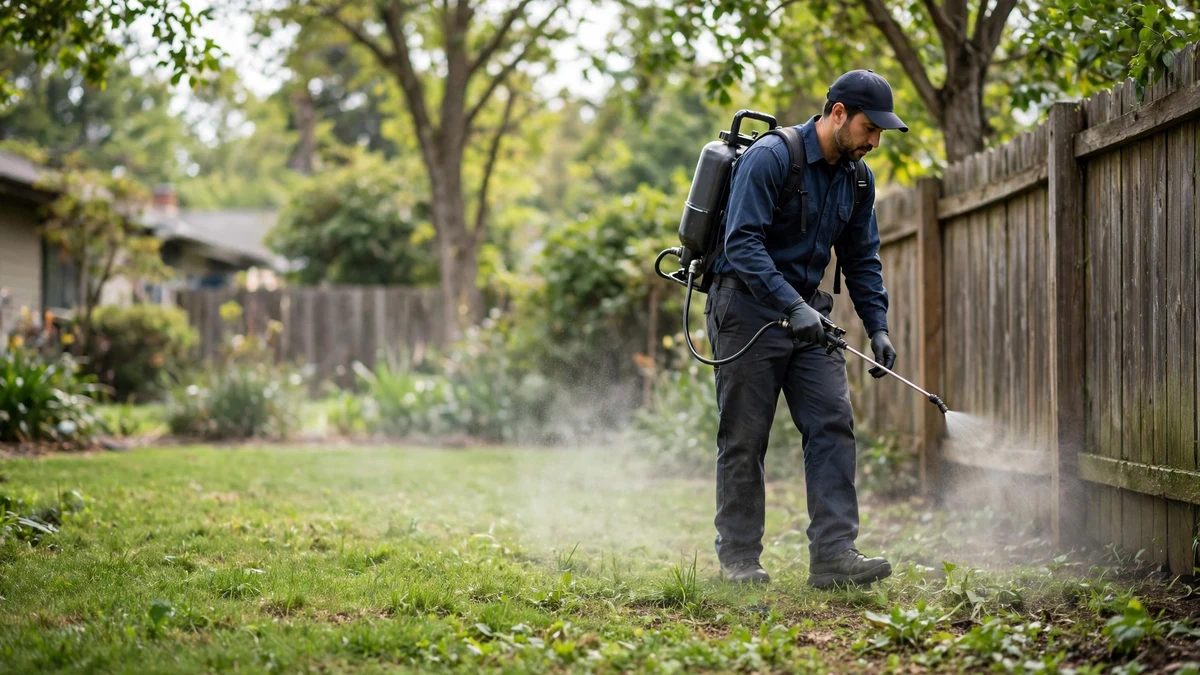
- Barrier application. We treat the resting vegetation: shrubs, hedges, lower canopy, fence lines, and under decks and porches - applied with attention to blooming plants and pollinator activity (more on that below).
- Seasonal scheduling. One visit suppresses; a season of visits controls. We set the re-treatment cadence for March through October so each brood cycle meets a treated yard.
What Can You Do Between Treatments?
Professional visits set the baseline; the weekly habits below protect it. These habits compound: each water source you eliminate is a brood that never hatches, and customers who follow the routine between visits consistently get better results than those who rely on the spray alone. Mosquito control is the pest service where the homeowner's contribution matters most, because new breeding sources appear with every rainstorm.
- Tip and toss weekly. Empty saucers, toys, tarps, and any container holding water - the 3-day rule is the schedule.
- Clean gutters so they drain fully; consider gutter guards if clogs recur.
- Refresh birdbaths every few days - scrubbed and refilled, not just topped off.
- Run fans on patios. Mosquitoes are weak fliers; a simple oscillating fan makes a seating area dramatically less bite-prone.
- Use EPA-registered repellents - DEET, picaridin, or oil of lemon eucalyptus - on skin and clothing when you will be out at dusk, following label directions.
- Mow and trim to reduce the shady, humid resting areas adults prefer.
What Are the Honest Limits of Mosquito Control?
We would rather tell you this upfront than have you discover it in August. No yard treatment makes a property one hundred percent mosquito-free: mosquitoes fly in from neighboring properties, from wooded areas, and from any untreated water within flight range - and in Whitfield County, that is a lot of water. Barrier sprays reduce the biting population resting in your vegetation; they do not create a force field at the property line. If your neighbor has a neglected pool or a tire pile, some of their mosquitoes will visit you, which is one reason neighborhood-wide participation works so well.
Two more honest notes. Bug zappers kill mostly moths and beneficial insects, not mosquitoes - studies consistently show mosquitoes are a tiny fraction of zapper kills, so we do not recommend them. And mosquito-repellent plants (citronella, lavender, and the rest) smell pleasant and may slightly reduce landings immediately around the plant, but they do not control a yard's mosquito population; no planting scheme replaces source reduction and barrier treatment.
What Affects the Cost of Mosquito Control?
We quote per property because yards differ more than houses do. The factors: yard size and how densely it is vegetated (more resting vegetation means more barrier application), how many breeding sources the inspection finds, whether you want a single pre-event treatment or a full-season plan, and the re-treatment cadence needed to hold through October. A one-time spray before a backyard wedding and a March-to-October seasonal program are different services with different scopes - our cost estimator page explains how we scope the quote after walking the yard.
Mosquito Control Across Dalton and Whitfield County
We treat mosquitoes throughout Dalton and Whitfield County - including Calhoun, Ringgold, and Varnell - with our full service area covering the rest. If you want your yard back for the season, call +1 (647) 367-1424, message us on WhatsApp, or schedule a visit. For the full picture of our pest control in Dalton, GA, start at the home page.