Call +1 (647) 367-1424 WhatsApp Us Request an Inspection
Wildlife removal in Dalton, GA is the humane trapping, exclusion, and cleanup of nuisance animals - raccoons, squirrels, bats, snakes, and the rest - from homes across Whitfield County and the North Georgia ridges. We are Dalton Pest Pros, and we approach wildlife differently than insects: these are intelligent, often protected animals, and the job is not complete when the animal is out - it is complete when it cannot get back in and the damage is repaired.
In short: Most wildlife jobs start with a noise in the attic. We identify the species from sound, timing, and sign, inspect the full exterior and attic for entry points, remove the animals humanely (live trapping or one-way doors - never poisons or sealing animals inside), exclude every entry with proper materials, and clean up the contamination they left behind. This page covers every species we handle, Georgia's legal context, and what you should never do.
Which Nuisance Animals Do We Remove in Dalton?
Because North Georgia's mix of suburbs, farmland, and wooded ridges supports a full cast of nuisance wildlife, we handle the complete set - and each species gets a different strategy. If it is in your attic, crawl space, or chimney, start here.
Raccoons
Raccoons are the heavyweight attic invader: strong, dexterous, and capable of tearing through soffits, roof vents, and shingles to den. They are nocturnal, so expect heavy thumping and vocalizations at night, and they establish latrines - communal droppings sites - that carry a real parasite risk (more below). Females den in attics in spring to raise kits, which changes the removal strategy entirely.
Squirrels - gray and flying
Gray squirrels are daytime attic noisemakers - scampering and gnawing during daylight hours, entering through chewed soffits and gable vents. Flying squirrels are the nocturnal counterpart: smaller, social, often in colonies, producing light scurrying with soft thumping at night and distinctive small droppings. Flying squirrel jobs are common in the wooded areas around Dalton and are frequently misdiagnosed as mice.
Bats
Bats roost in attics, gable vents, and chimney flashing, entering through gaps as small as half an inch. They are ecologically valuable and legally sensitive - maternity season (roughly late spring through summer) means flightless young may be present, and exclusion during that window is both inhumane and counterproductive. Bat work is scheduled around the colony's biology, using one-way doors at the primary exits after the young can fly.
Snakes
Most snakes in Dalton yards are harmless rat snakes and garter snakes following rodents - and a snake indoors usually means a rodent problem drew it there (see our Dalton rodent control page). Venomous species - copperheads and timber rattlesnakes - do occur in North Georgia. Do not approach any unidentified snake; call a professional. We remove and relocate snakes and, more importantly, find out why they came.
Opossums, skunks, and armadillos
Opossums den under decks, sheds, and in crawl spaces - slow-moving, nocturnal, and generally easy to trap and relocate. Skunks dig under foundations and spray when threatened, so skunk work is planned to avoid the spray: careful trapping and release protocols, not chase-and-grab. Armadillos do not enter homes but destroy yards and flower beds rooting for grubs; armadillo control is trapping plus yard-habitat work.
Dead animal removal
Something died in the wall, attic, or crawl space - the smell tells you before anything else does. We locate, remove, and deodorize, because a decomposing animal in a wall void is both a sanitation issue and a magnet for secondary pests like flies and beetles.
What's Making Noise in Your Attic?
Because you usually hear the animal before you see it, sound plus timing is the fastest identification tool we have. The table below is the same diagnostic we use on the phone - and our wildlife in the attic guide expands it with droppings clues and next steps.
| What you hear | When | Likely animal |
|---|---|---|
| Light scampering, gnawing | Night | Mice or rats - see rodent control |
| Heavy thumping, walking, vocal chattering | Night | Raccoons |
| Daytime scampering and gnawing | Day | Gray squirrels |
| Light scurrying, soft thumping in groups | Night | Flying squirrels |
| Chirping, fluttering, squeaking | Dusk and dawn | Bats or birds |
| Scratching under the floor | Night | Rats, mice, or opossums in the crawl space |
In short: Nighttime heavy sounds mean raccoons; daytime activity means gray squirrels; dusk-and-dawn fluttering means bats; light nighttime scratching in walls means rodents. Tell us what you hear and when, and we will usually know the species before we arrive.
What Happens During a Wildlife Inspection?
Because the animal got in through a specific opening - and because babies change everything - our inspection is part detective work, part construction survey, in the same order every time.
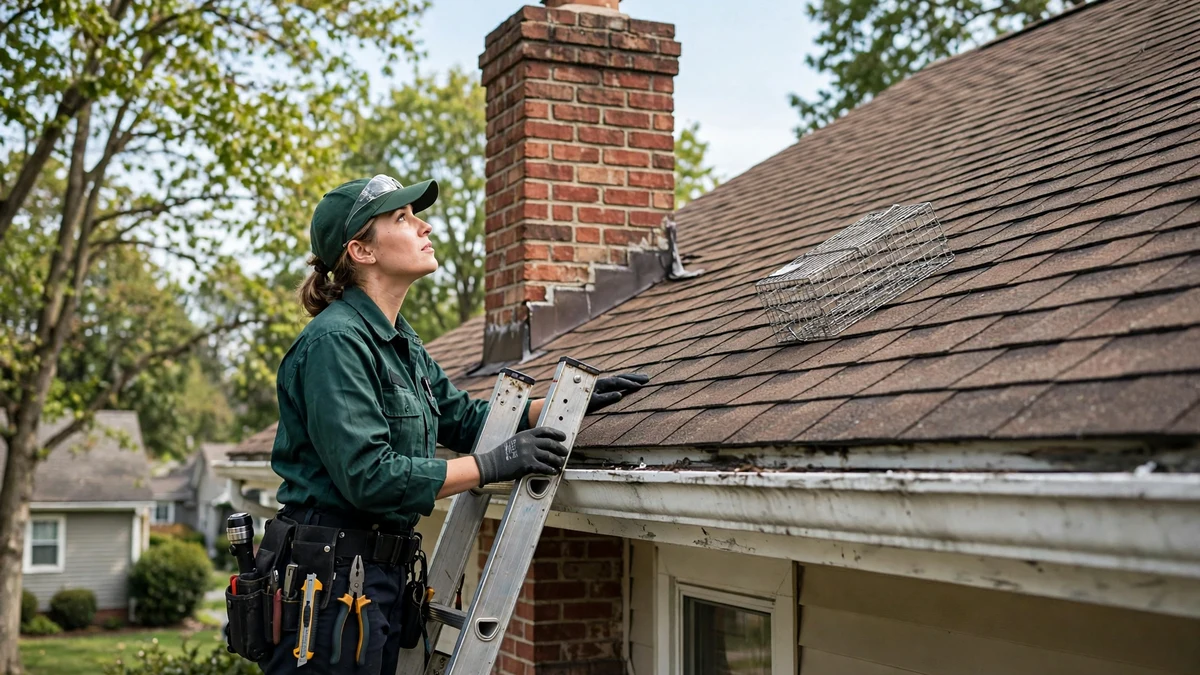
- Exterior perimeter and roofline. Full walk-around: foundation, siding, and then up - soffits, fascia, gable vents, roof junctions, chimney flashing. We are reading rub marks, hair, and disturbed insulation the way a tracker reads sign.
- Attic entry and mapping. In the attic with a bright light: nesting material, droppings, tracks in dust, and the entry hole itself - almost always findable from the inside by daylight showing through.
- Entry-point diagnosis. We identify every current and potential entry, not just the obvious one - animals use secondary holes, and sealing one of three entries just reroutes them.
- Baby-season check. In spring and summer, we check for dependent young before any removal plan is set. Sealing a mother out from her kits - or trapping a nursing female - creates suffering and a worse problem inside your walls. The plan waits for biology when biology requires it.
- Removal and exclusion plan. Species, numbers, entries, timing, and cleanup scope - laid out before any work begins.
How Does Humane Wildlife Removal Work?
Humane is not a marketing word for us - it is a constraint on method. Every technique below removes the animal without poison, without glue boards, and without sealing living animals inside the structure.
Live trapping
Species-appropriate cage traps, baited and placed on the animal's travel routes, checked on a schedule that never leaves an animal waiting. Trapping is selective - the right trap, the right bait, the right placement - which is why professional trapping outperforms the hardware-store cage left hopefully in the attic.
One-way exclusion doors
For bats, and often for squirrels and raccoons, the cleanest method is a one-way door mounted over the primary entry: the animal exits to forage and cannot re-enter. No handling, no stress, no separation of mothers from young when timed correctly. It is the closest thing wildlife work has to an elegant solution.
Hand removal
Some situations - a snake in the garage, an opossum under the deck, kits too young to trap - call for direct, careful hand removal with proper equipment. Slow, calm, and safe for everyone including the animal.
What happens after capture - Georgia relocation rules
Georgia regulates the relocation of trapped wildlife, and the rules exist for good reason: relocated animals can spread disease and disrupt local populations. We handle captured animals in compliance with Georgia's regulations - which generally means release parameters set by the state, not improvised roadside releases. We explain the specific disposition for your species and situation before we trap, so there are no surprises.
What Does Georgia Law Say About Trapping Wildlife?
Georgia law requires a license to trap wildlife - this is a verifiable legal fact about the state, not a credential claim about our company. The licensing requirement exists because trapping affects game species, furbearer management, and disease control, and the state sets seasons, methods, and permissions accordingly. For homeowners, the practical meaning is simple: wildlife trapping in Georgia is a regulated activity, and it should be performed by someone operating within that framework.
Bats deserve a special note. Beyond the general trapping rules, bat maternity season - roughly late spring through summer, when flightless young are in the roost - makes exclusion timing critical. Excluding a colony while young are present strands them inside to die, creating odor, sanitation, and secondary pest problems. Responsible bat work is scheduled for after the young can fly, using one-way doors at the exits. Anyone offering to seal your bats in June is telling you they do not understand bat biology.
How Do You Keep Wildlife Out for Good?
Removal without exclusion is a revolving door - the attic that housed raccoons this spring will house them again next spring if the entries stay open. Exclusion is the permanent half of wildlife work, and the materials are specific: metal flashing and galvanized steel over chewed soffits and fascia, quarter-inch hardware cloth over gable and roof vents, chimney caps on every flue, and vent guards on dryer and bathroom exhausts. We trim back tree branches to break the roofline highway - generally keeping limbs from touching or overhanging the roof - and we address the attractants: unsecured garbage, pet food left out, and bird feeders that feed more than birds. A sealed, uninviting structure is the only wildlife solution that lasts.
What About Cleanup After the Animals Are Gone?
Animals leave more than memories. Raccoon latrines - the communal droppings sites raccoons establish on roofs, in attics, and at the base of trees - can harbor Baylisascaris roundworm eggs, a genuine health risk if ingested; latrine cleanup follows careful protocols, not a shop-vac and hope. Insulation compressed, tunneled, and contaminated by nesting loses its thermal value and often needs partial replacement. Urine saturates wood and drywall, and the odor lingers - enzymatic treatment and, where needed, sealing of affected surfaces resolves what airing out cannot. We scope cleanup honestly during the inspection: what must be removed, what can be treated, and what is cosmetic.
What Should You Never Do With Wildlife in Your Home?
The three mistakes we see most often, in order of how badly they backfire. Never seal an entry with animals inside. They will chew new exits - often into the living space - or die in the walls, and both outcomes are worse than the original problem. Poison is the wrong tool for wildlife. There is no labeled, legal poison for raccoons, squirrels, or bats in residential use; poisoned animals die in inaccessible voids, and secondary poisoning threatens pets and non-target wildlife. Mothballs, ammonia rags, and ultrasonic gadgets do not work. Mothballs are a pesticide being used off-label in a living space - illegal and ineffective - and animals habituate to noise and light deterrents within days. If the shortcut worked, professionals would use it.
What Affects the Cost of Wildlife Removal?
Wildlife jobs are the most variable work we do, so every quote follows an inspection. The factors: which species and how many animals, how difficult the attic or crawl space access is, how many entry points need exclusion and the scope of that carpentry, and how much cleanup and repair the contamination requires. A single opossum under a deck and a raccoon family in an attic with latrine cleanup are different jobs - our cost estimator page explains how we scope the quote so you can see exactly what drives it.
Wildlife Removal Across Dalton and North Georgia
We remove and exclude nuisance wildlife throughout Dalton and the surrounding North Georgia communities - including Calhoun, Ringgold, and Chatsworth - with our full service area covering the rest. If something is living in your attic, do not seal it in and do not wait - call +1 (647) 367-1424, message us on WhatsApp, or request an inspection. For the full picture of our pest control in Dalton, GA, start at the home page.