Call +1 (647) 367-1424 WhatsApp Us Request an Inspection
Bed bug treatment in Dalton, GA is the professional detection, elimination, and prevention of bed bug infestations in homes, apartments, and rentals - and it is a job where the method matters as much as the effort. We are Dalton Pest Pros, and we treat bed bugs across Northwest Georgia, from single-family homes to multi-unit buildings along the I-75 corridor where travel and turnover keep introductions coming.
In short: Bed bugs are hitchhiking insects that hide within a few feet of where people sleep. Elimination means confirming the infestation with a real inspection (bites alone do not count), then applying whole-room heat, targeted chemical treatment, or both - plus follow-up visits, because eggs survive single applications. This page covers identification, how they spread, both treatment methods, the preparation protocol, and why DIY usually fails.
How Do You Know You Have Bed Bugs?
Because several household pests are mistaken for bed bugs - and bed bugs are mistaken for other problems - confirmation starts with knowing exactly what you are looking at. Our early signs of bed bugs guide goes deeper, but here is the identification core.
What bed bugs look like
An adult bed bug is about the size of an apple seed - roughly 4 to 5 millimeters long - reddish-brown, oval, and flat when unfed, swelling and darkening after a blood meal. Nymphs are smaller and paler, nearly translucent when young. Eggs are tiny, pearly white, and glued into cracks and crevices. The common lookalikes: carpet beetle larvae (fuzzy, tapered, and they do not bite), baby cockroaches (faster, with visible antennae and a different body shape - see our cockroach control page if you are unsure), and bat bugs (nearly identical to bed bugs but associated with bats in attics or wall voids).
Early signs most people miss
The earliest evidence is rarely the bug itself. Look for rust-colored fecal spotting - tiny dark specks that smear when wiped with a damp cloth - along mattress seams, box spring edges, and headboard joints. Shed skins, translucent and bug-shaped, accumulate in harborages as nymphs grow. Blood smears on sheets, a sweet musty odor in heavy infestations, and of course bites: usually in lines or clusters on exposed skin during sleep. Crucially, not everyone reacts to bed bug bites - some people show nothing at all - which is why a lack of bites never rules out an infestation.
Why bite marks alone don't confirm an infestation
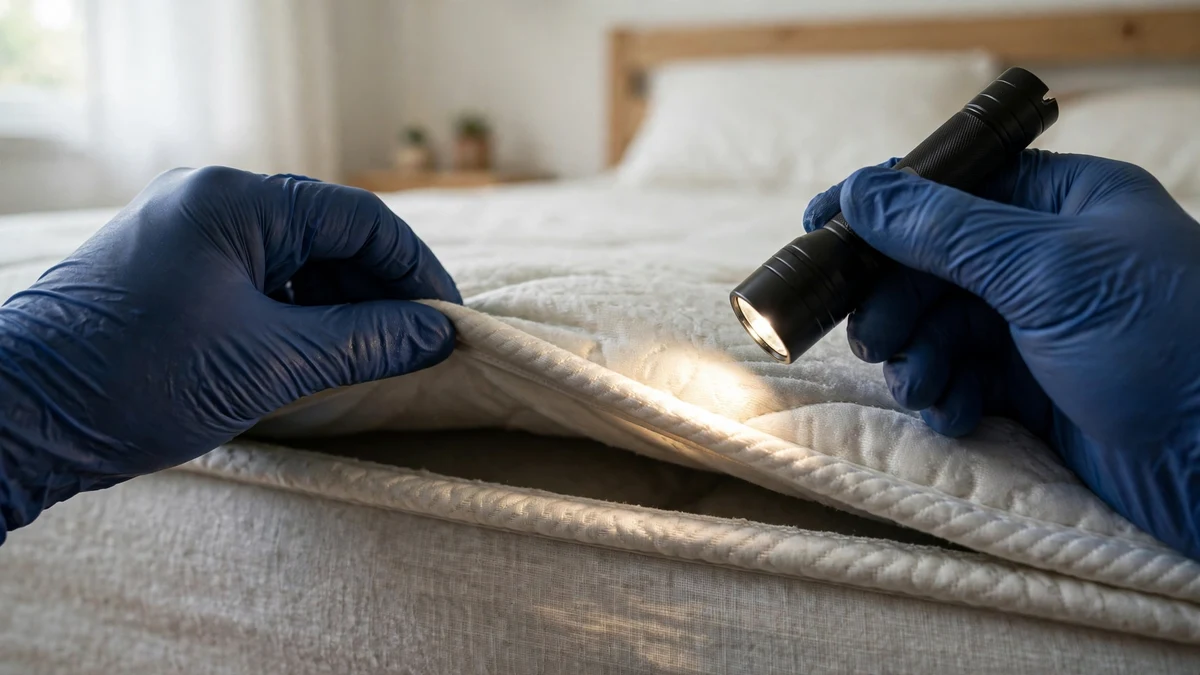
Bite marks are the least reliable diagnostic sign in the building. Skin reactions vary wildly between people, mimic other conditions, and cannot be traced to a species by appearance - even dermatologists cannot diagnose bed bugs from bites alone. Public-health guidance, including from state health departments, is consistent on this point: confirmation requires finding the insect or its signs (fecal spotting, shed skins, eggs) in the environment. That is why our inspection starts with a flashlight at the mattress, not with an examination of your arms.
How Do Bed Bugs Spread Into Dalton Homes?
Bed bugs do not fly or jump - they crawl, and they are world-class hitchhikers. Understanding the vectors tells you both how they arrived and how to keep them from coming back. Our how bed bugs spread article traces each route in detail.
Travel and hotels along the I-75 corridor
Dalton sits on I-75, one of the busiest travel arteries in the Southeast, and every hotel, motel, and short-term rental along it is a potential transfer point. A bed bug that crawls into a suitcase seam or a folded jacket in a hotel room rides home and walks off into your bedroom. Business travelers and vacationing families are the most common introduction vector we see - the infestation often starts in the bedroom of whoever traveled most recently.
Used furniture and mattresses
Secondhand bed frames, headboards, couches, and mattresses are the second great vector. Bed bugs hide in joints, screw holes, and fabric folds that look clean to the naked eye. Anything upholstered or wooden that enters your home used should be inspected joint by joint before it crosses the threshold - ideally before it leaves the seller's curb.
Apartments and multi-unit buildings
In multi-unit housing, bed bugs travel through wall voids, along plumbing and electrical chases, and under doors. They typically stay within about eight feet of sleeping areas - a figure cited by the CDC - but in an apartment building, "sleeping area" includes the neighbor's bedroom on the other side of your wall. Multi-unit infestations often require coordinated treatment of adjacent units, not just the unit that complained.
They crawl - they don't fly or jump
This single fact defeats most bed bug myths. They cannot drop from ceilings onto beds (they climb the bed frame), they cannot jump between people, and they do not live on human bodies like lice. Every bed bug in your home walked there from a harborage or a hitchhiked item - which means every introduction has a traceable route, and breaking the routes is half of prevention.
What Happens During a Bed Bug Inspection?
Because bed bugs hide within feet of where people sleep, our inspection is a close-quarters, methodical search - and it follows the same order every time so nothing gets skipped.
- Interview. We start with questions: who is being bitten and where, when did it start, any recent travel, new or used furniture, and whether adjacent units have reported problems. The answers tell us which rooms to prioritize.
- Bedroom inspection with flashlight. Mattress seams and piping, box spring edges and underside, headboard joints, nightstand interiors, baseboards behind the bed, and carpet edges. We are looking for live bugs, fecal spotting, shed skins, and eggs.
- Adjacent rooms and furniture. Couches and recliners where people nap, nearby closets, and - in multi-unit buildings - the shared walls. Bed bugs follow people, not floor plans.
- Confirmation and plan. We show you what we found, confirm the species, map the affected rooms, and lay out the treatment options below with honest expectations about visits and preparation.
Which Bed Bug Treatment Method Works Best?
There are two professional approaches - heat and chemical - and a third option that combines them. The comparison below is the same one we walk through with customers, because the right choice depends on the infestation's size, the home's layout, and how much preparation the household can realistically do.
| Method | How it works | Strengths | Limitations | Best for |
|---|---|---|---|---|
| Whole-room heat treatment | Specialized heaters raise room temperatures to lethal levels (around 120-135°F) and hold them long enough to kill all life stages, including eggs, in one visit | Kills eggs in a single visit; no chemical residue; treats the whole room including items in it | Higher preparation burden; heat must reach every harborage - clutter insulates bugs; heat-sensitive items must be removed | Established infestations; situations where a single decisive visit matters; chemical-sensitive households |
| Targeted chemical application | Professional insecticides applied to cracks, crevices, and harborages where bed bugs hide; insect growth regulators may be added | Lower prep burden; residual activity continues killing after we leave; precise and economical | Eggs survive - follow-up visits are mandatory to catch newly hatched nymphs; requires thorough application to every harborage | Early or moderate infestations; multi-room situations treated in stages; budget-conscious plans |
| Combination | Heat for the core infested rooms plus targeted chemical residuals in surrounding areas and follow-up zones | Highest confidence; heat handles eggs now, residuals guard against stragglers later | Most preparation and highest effort of the three | Heavy or widespread infestations; multi-unit buildings; cases where failure is not an option |
In short: Heat kills everything including eggs in one visit but demands serious preparation; chemical treatment is precise and economical but always needs follow-ups because eggs survive; combining them gives the highest confidence. We recommend based on what the inspection found - not on which method is simplest for us.
One fact shapes every plan: bed bug eggs survive single applications of chemical treatment. That is not a product failure - it is biology. Any chemical-based plan that does not include scheduled follow-up visits timed to the egg-hatch cycle is an incomplete plan, and we will tell you so upfront.
How Should You Prepare Your Home for Bed Bug Treatment?
Preparation is not busywork - it determines whether the treatment reaches the bugs. Heat cannot penetrate a cluttered room; chemical cannot reach a harborage buried under belongings. Our preparing your home for treatment guide covers the general principles; the bed-bug-specific checklist below is what we hand to customers.
| Area | What to do |
|---|---|
| Bedrooms | Strip beds; wash all bedding and clothing in hot water and dry on the highest heat setting; bag cleaned items in sealed bags until after treatment |
| Clutter | Declutter floors, closets, and under beds - bag and heat-dry what you keep; discard what you do not need, sealed in bags |
| Furniture | Pull beds and furniture a few inches from walls; empty nightstands and dressers near the bed |
| Heat-sensitive items | For heat treatment: remove candles, aerosols, medications, plants, pets, and items that warp or melt - we provide the full list |
And what not to do: do not move infested items from room to room - you will seed new harborages throughout the house. Do not sleep on the couch to "escape" the bedroom - the bugs will follow you and colonize the living room. Do not apply over-the-counter sprays before we arrive; repellent sprays scatter bed bugs deeper into walls and make professional treatment harder. Leave the bugs where they are and let us come to them.
Why Does DIY Bed Bug Treatment Usually Fail?
We are asked about DIY in nearly every bed bug consultation, and the honest answer is that bed bugs are the pest where DIY fails most consistently. Over-the-counter sprays are typically repellent: they kill the bugs they touch and scatter the rest into wall voids and adjacent rooms, turning a one-room problem into a whole-house problem. Total-release foggers ("bug bombs") do not penetrate the cracks and crevices where bed bugs actually harbor - the label even warns against using them for bed bugs - while filling your home with pesticide residue. Vacuuming and steam help as supplements, but without a plan for the eggs and the harborages you cannot see, the population rebounds within weeks. Professional treatment works because it is systematic: every harborage mapped, every life stage accounted for, follow-ups scheduled. That system is what you are paying for.
How Do You Keep Bed Bugs From Coming Back?
Elimination is only half the job; the other half is not reintroducing them. Post-treatment, we recommend mattress and box spring encasements - zippered covers that trap any missed bugs inside and make future inspections dramatically easier. Build a travel routine: inspect hotel mattress seams and headboards on arrival, keep luggage on racks away from the bed, and heat-dry travel clothing on return. Inspect secondhand furniture before it enters the home, and in multi-unit buildings, report suspected activity early - early reports are what keep one unit's problem from becoming the building's problem. A few passive monitors under bed legs give you early warning without effort.
What Affects the Cost of Bed Bug Treatment?
We price per job because the variables matter more than the averages: how many rooms are affected, how severe the infestation is, whether the plan uses heat, chemical, or both, and how many follow-up visits the biology demands. A single early-caught bedroom and a whole-house heavy infestation are different jobs with different scopes. Our cost estimator page explains how we build a quote - after an inspection, never before, because quoting bed bugs sight unseen is how customers get surprised.
Bed Bug Treatment Across Dalton and Surrounding Towns
We treat bed bugs throughout Dalton and the surrounding Northwest Georgia communities - including Calhoun, Ringgold, and Chatsworth - with our full service area covering the rest. If you are finding fecal spotting, shed skins, or bites in lines, do not wait for it to get worse - bed bugs do not resolve on their own. Call +1 (647) 367-1424, message us on WhatsApp, or request an inspection. For the full picture of what we do, start at our pest control in Dalton, GA home page.